
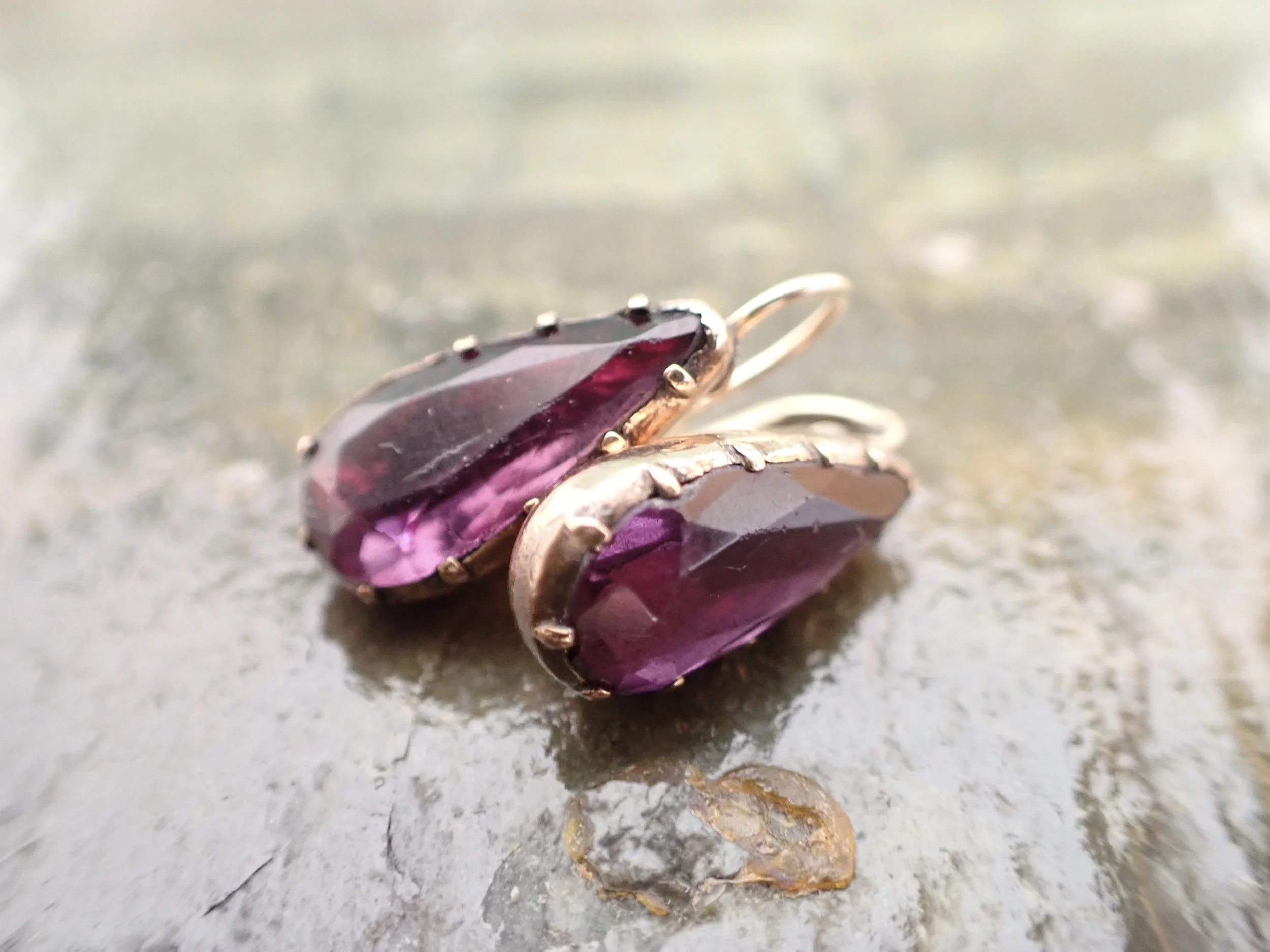
How to Identify Georgian Jewelry
Among all categories of antique jewelry, Georgian jewelry is often regarded as the rarest, most romantic and most desirable. Handmade entirely before the advent of industrial production, Georgian jewelry offers a direct connection to the craftsmanship, artistry and elegance of the eighteenth and early nineteenth centuries.
Today, genuine Georgian jewelry is highly sought after by collectors around the world. Its rarity, beauty and historical significance make it one of the most fascinating areas of antique jewelry collecting.
What is Georgian Jewelry?
Georgian jewelry refers to jewelry produced during the reigns of Kings George I, II, III and IV, spanning approximately 1714 to 1837.
This period encompasses enormous cultural and artistic change. The Georgian era witnessed the Enlightenment, the rise of global trade, the American Revolution, the Napoleonic Wars and the Regency period.
Unlike Victorian jewelry, which benefited from industrial manufacturing, Georgian jewelry was almost entirely handmade. Every component was individually crafted by skilled artisans, making each surviving piece unique.
Why Georgian Jewelry is So Rare
One of the defining characteristics of Georgian jewelry is its scarcity.
Jewelry was enormously valuable during the eighteenth century. When fashions changed or gemstones were needed for new designs, older pieces were frequently dismantled and remade.
As a result, only a small percentage of Georgian jewelry survives today.
Those pieces that have endured often show evidence of adaptation and alteration, reflecting generations of ownership and changing tastes.
Georgian Rings
Georgian rings are among the most collectible forms of antique jewelry.
Popular designs included cluster rings, mourning rings, lover’s eye rings and gemstone-set bands. Diamonds were highly prized, although their appearance differed significantly from modern examples.
Many Georgian diamonds were cut using rose-cut or old mine-cut techniques, creating a softer and more romantic sparkle.
Coloured gemstones including garnets, topaz, emeralds and sapphires were also widely used.
Georgian Necklaces and Pendants
Georgian necklaces often displayed extraordinary craftsmanship.
Foiled gemstones were particularly popular during the period. By placing coloured foil behind gemstones, jewellers could enhance their brilliance and colour. These delicate settings require careful handling today but remain one of the most distinctive features of Georgian jewelry.
Lockets, pendants and miniature portrait jewels were also highly fashionable.
The Romance of Sentimental Jewelry
The Georgian era had a deep appreciation for sentiment and symbolism.
Jewelry was often used to express affection, friendship and remembrance. Miniature portraits allowed loved ones to carry each other’s likenesses, while lover’s eye miniatures became one of the most intriguing jewelry trends of the period.
These tiny paintings depicted a single eye, preserving the identity of the sitter while maintaining an air of mystery.
Acrostic jewelry, secret inscriptions and symbolic motifs were also widely used.
Popular Georgian Jewelry Motifs
Nature played an important role in Georgian jewelry design.
Flowers symbolised beauty and affection, while ribbons and bows represented love and commitment. Birds frequently appeared as symbols of freedom and devotion.
During the late Georgian and Regency periods, interest in the classical world led to the popularity of urns, laurel wreaths and Greco-Roman motifs inspired by archaeological discoveries.
These influences helped shape some of the most elegant jewelry designs of the era.
Georgian Mourning Jewelry
Mourning jewelry was particularly important during the Georgian period.
Highly personalised memorial rings and lockets were often commissioned following a death. Many examples feature hand-painted scenes, woven hairwork and detailed inscriptions recording the life of the deceased.
These pieces are among the most intimate and historically revealing examples of Georgian jewelry.
How to Identify Georgian Jewelry
Several characteristics can help identify genuine Georgian jewelry.
Handmade construction is perhaps the most important. Georgian pieces often display subtle irregularities that reflect their entirely hand-crafted origins.
Closed-back settings were common, particularly in gemstone jewelry. Foiled gemstones, hand-cut stones and early diamond cuts are all strong indicators of Georgian manufacture.
Because hallmarking was less consistent than in later periods, many Georgian pieces lack the clear marks collectors might expect to find on Victorian jewelry.
Why Collectors Love Georgian Jewelry
Few categories of antique jewelry possess the romance and rarity of Georgian jewelry.
Every surviving piece has endured wars, social change and more than two centuries of history. Their handmade construction, scarcity and extraordinary craftsmanship make them highly desirable among collectors.
For many enthusiasts, Georgian jewelry represents the pinnacle of antique jewelry collecting. These remarkable objects provide a direct connection to a world of candlelit drawing rooms, grand tours, aristocratic romance and exceptional craftsmanship.
At The Windsor Archive, we are continually captivated by the beauty and history of Georgian jewelry. Rare, evocative and endlessly fascinating, these pieces remain among the greatest treasures of the antique jewelry world.