
How to Identify Victorian Jewelry
The Victorian era in Britain was a period of extraordinary growth, innovation and creativity. The royal family, and particularly Queen Victoria herself, had a profound influence on Jewelry fashions throughout the nineteenth century. Despite her often solemn public image, Victoria was one of the great style-setters of her age. The eyes of Britain’s Jewelry-loving public were firmly fixed on the Queen, and her affection for both the natural world and the more sentimental, sometimes even macabre, aspects of life helped shape many of the Victorian jewelry styles we recognise today.
Rich in symbolism, craftsmanship and history, Victorian jewelry remains one of the most collected and admired categories of antique jewelry. These remarkable pieces offer a fascinating glimpse into one of the most transformative periods in British history.
What is Victoria Jewelry?
Victorian jewelry refers to rings, necklaces, pendants, bracelets, bangles, earrings, brooches and charms produced during the reign of Queen Victoria, which lasted from 1837 until 1901.
During this period, Britain experienced enormous industrial, economic and social change. The Industrial Revolution transformed manufacturing and created unprecedented prosperity for many people. Leisure time became available to a much wider section of society, and fashion became increasingly important not only to the upper classes but also to the growing middle classes.
Victorian Jewelry was produced in greater quantities than ever before. New machinery and manufacturing techniques made jewelry more accessible, while lower-purity gold alloys, including 9ct gold, became available for the first time. Silver, rolled gold and pinchbeck were also widely used to create beautiful and affordable jewelry for a broader market.
Following the Gold and Silverware Act of 1854, official hallmarks were introduced for lower-carat gold, making solid gold jewelry attainable for many more people. As a result, Victorian Jewelry survives in significant numbers today and remains highly collectable.
The Styles That Defined Victorian Jewelry
One of the reasons Victorian Jewelry is so fascinating is the sheer variety of styles that emerged throughout the era. The tastes of the period evolved significantly over Victoria’s long reign, influenced by personal events, archaeological discoveries, technological advances and changing social attitudes.
Victorian Rings
Rings were among the most popular forms of Victorian Jewelry. Ornate gemstone-set rings were particularly fashionable, with diamonds, sapphires, rubies, emeralds and pearls frequently appearing in cluster designs with fancy settings.
Sentimental jewelry also flourished during this period. Snake rings became especially popular after Prince Albert presented Queen Victoria with a serpent engagement ring in 1839. The snake symbolised eternal love and devotion, making it one of the defining motifs of Victorian Jewelry.
Acrostic rings were another Victorian favourite. These clever pieces used the first letter of each gemstone to spell hidden words. A ring containing Ruby, Emerald, Garnet, Amethyst, Ruby and Diamond, for example, would spell “REGARD”.
Victorian Brooches
Brooches were essential accessories throughout the Victorian period. They were worn on dresses, collars, scarves and hats, often serving as both decorative and symbolic pieces.
Victorian brooches frequently featured highly detailed naturalistic designs inspired by flowers, birds, insects and foliage. Cameos remained fashionable throughout the era, particularly those carved from shell or hardstone. The Victorians were enthusiastic collectors and amateur naturalists, and their fascination with nature is reflected in many of the jewelry designs of the period.
Victorian Necklaces and Lockets
Lockets held particular significance during the Victorian era. These deeply personal pieces often contained photographs, miniature portraits or locks of hair belonging to loved ones.
Victorian culture placed great importance on sentimentality, and jewelry was frequently used to commemorate relationships, family members and important life events. Necklaces ranged from simple chains and pendants to elaborate gemstone collars worn by wealthier members of society.
The Three Periods of Victorian Jewelry
Antique jewelry specialists often divide Victorian Jewelry into three distinct phases, each reflecting different cultural influences and changing tastes.
Romantic Period (1837–1860)
The early Victorian period is often referred to as the Romantic Period. Queen Victoria’s happy marriage to Prince Albert heavily influenced the jewellery fashions of the day.
Jewelry from this era is characterised by themes of love, nature and sentimentality. Hearts, flowers, birds, bows and serpents were especially popular motifs. Many pieces were handmade and display exceptional craftsmanship. Yellow gold was favoured, and gemstones were often set in richly decorated mounts.
Grand Period (1860–1885)
The death of Prince Albert in 1861 profoundly affected Queen Victoria and, by extension, Victorian fashion.
Victoria entered a prolonged period of mourning, and darker jewellery styles became increasingly fashionable. Jet, onyx, garnet and black enamel featured prominently in jewelry from this period.
Mourning Jewelry became an important part of Victorian culture. Pieces were created to commemorate deceased loved ones and frequently incorporated hairwork, inscriptions and symbolic motifs such as urns, crosses and weeping willows.
At the same time, archaeological discoveries in Egypt, Greece and Rome inspired new jewellery styles. Ancient revival pieces featuring scarabs, classical motifs and archaeological influences became highly fashionable.
Aesthetic Period (1885–1901)
The final years of Victoria’s reign saw jewellery become lighter, more artistic and increasingly refined.
The Aesthetic Movement rejected excessive ornamentation and embraced beauty for its own sake. Designers drew inspiration from Japanese art, nature and the emerging Arts and Crafts movement.
Stars, crescent moons and delicate floral motifs became fashionable, while diamonds gained increasing prominence thanks to improved cutting techniques and greater gemstone availability.
Popular Victorian Jewelry Motifs
Victorian Jewelry is renowned for its rich symbolism. Many designs carried hidden meanings, allowing wearers to communicate emotions and sentiments through their jewelry.
Snakes
Perhaps the most iconic Victorian motif, snakes symbolised eternal love, wisdom and rebirth. Their popularity can be traced directly to Queen Victoria’s engagement ring.
Hearts
Heart-shaped jewelry represented romantic affection and emotional devotion. Lockets, rings and brooches featuring hearts were commonly exchanged between sweethearts.
Insects and Butterflies
Victorians were fascinated by natural history, and insect jewelry became highly fashionable. Beetles, butterflies and dragonflies symbolised transformation, beauty and the wonders of the natural world.
Stars and Crescent Moons
Stars represented guidance and aspiration, while crescent moons symbolised femininity and change. These celestial motifs became especially fashionable during the late Victorian period.
Flowers
Flowers carried their own symbolic meanings within Victorian culture. Forget-me-nots represented remembrance, roses symbolised love and lilies were associated with purity.
Victorian Mourning Jewelry
No discussion of Victorian Jewelry would be complete without mentioning mourning jewelry.
Following Prince Albert’s death, Queen Victoria famously wore black for the remainder of her life. Mourning customs became deeply embedded within Victorian society, and jewelry played an important role in expressing grief and remembrance.
Jet, particularly Whitby Jet from Yorkshire, became one of the most sought-after materials of the era. Hair jewelry was also common, with locks of a loved one’s hair woven into intricate designs or preserved beneath glass.
Today, Victorian Mourning Jewelry provides a remarkable insight into nineteenth-century attitudes towards death, memory and family.
How to Identify Genuine Victorian Jewelry
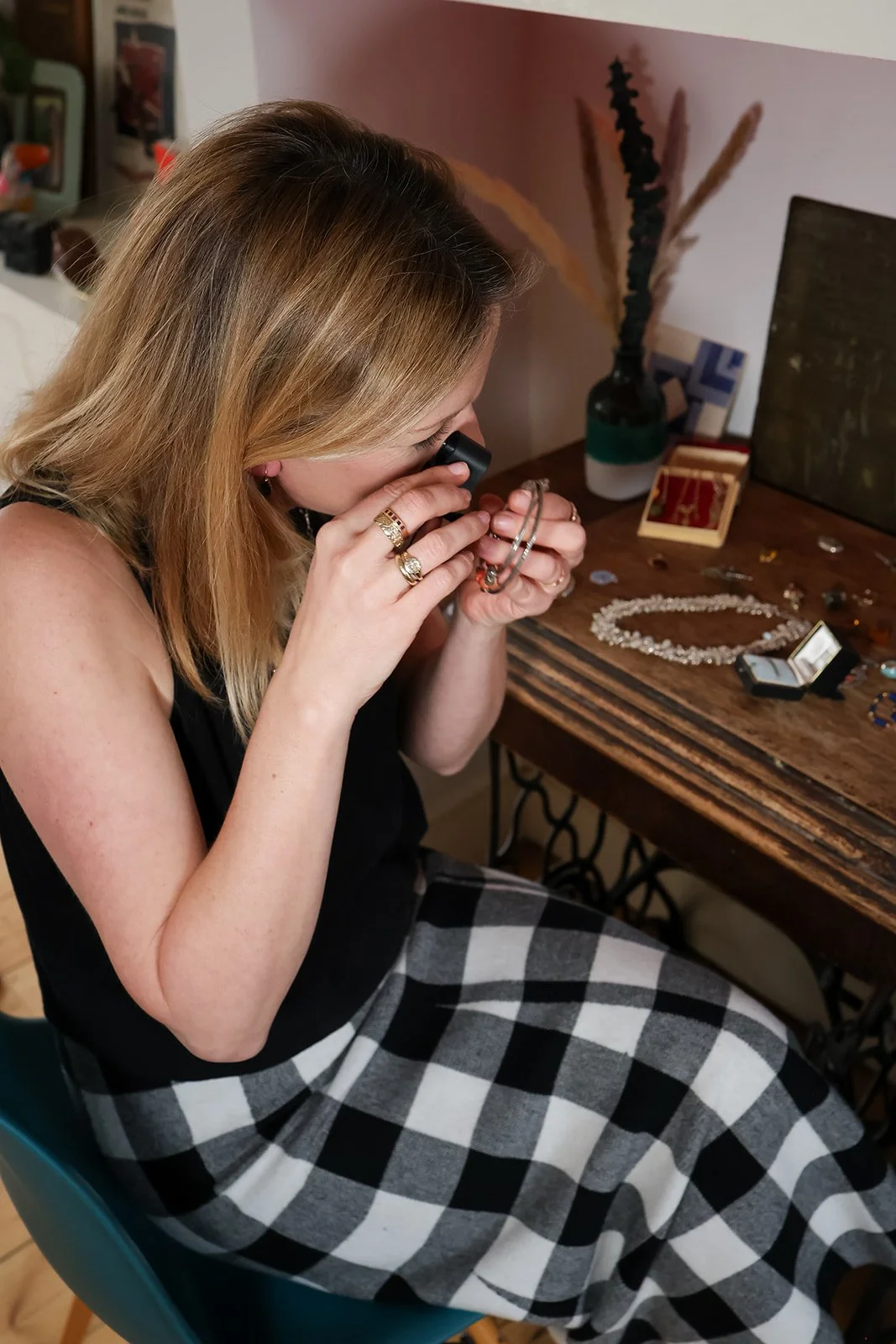
When identifying Victorian Jewelry, collectors should look for period hallmarks, hand-cut gemstones, closed-back settings and symbolic motifs associated with the era.
Old mine-cut diamonds, rose-cut diamonds, garnets, pearls and turquoise are commonly encountered in Victorian pieces. Materials such as Whitby Jet, pinchbeck, rolled gold and 9ct gold can also be strong indicators of Victorian manufacture.
Understanding the three phases of Victorian Jewelry can be particularly helpful when dating a piece, as styles evolved significantly between the Romantic, Grand and Aesthetic periods.
Why Collectors Love Victorian Jewelry
Victorian Jewelry remains highly sought after because it combines beauty with extraordinary historical interest.
These pieces tell stories about love, loss, social change, technological innovation and personal identity. Whether it is a serpent ring symbolising eternal devotion, a mourning brooch preserving the memory of a loved one, or a beautifully carved cameo inspired by the ancient world, Victorian Jewelry captures the spirit of an era unlike any other.
For modern collectors, Victorian Jewelry offers more than aesthetic appeal. It provides a tangible connection to the people, fashions and cultural movements that shaped the nineteenth century.
At The Windsor Archive, we are continually fascinated by the symbolism, craftsmanship and enduring beauty of Victorian Jewelry. More than a century after Queen Victoria’s reign ended, these remarkable pieces continue to enchant collectors around the world.